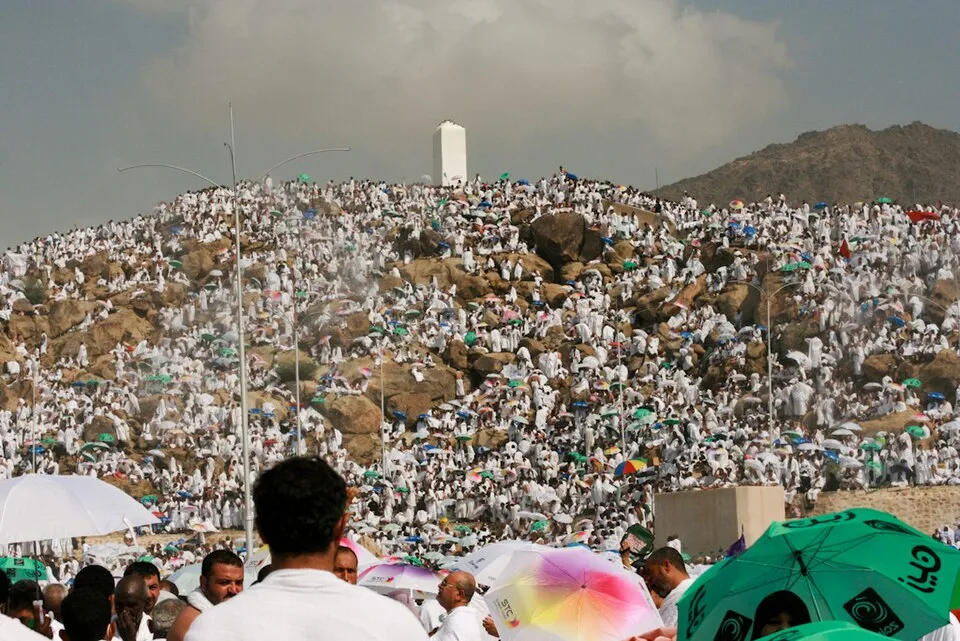
A complete guide to the Day of Arafah — the climax of Hajj on the plain of Arafat, the virtue of fasting for non-pilgrims, the Prophet's Farewell Sermon, and how to make the most of the 9th of Dhul-Hijjah.
There is one day in the year when the entire focus of the Muslim world narrows to a single plain east of Makkah. On the Day of Arafah, millions of pilgrims stand bareheaded under the sun, hands raised, asking forgiveness — while around the globe, those not on Hajj fast and pray in solidarity with them. The Prophet ﷺ called the whole of Hajj by the name of this day: "Hajj is Arafah."
This guide explains what the Day of Arafah is, what happens on it, and how both pilgrims and non-pilgrims can make the most of it.
Quick answer: The Day of Arafah falls on the 9th of Dhul-Hijjah, the day before Eid al-Adha. For pilgrims, it is the essential pillar of Hajj: they gather on the plain of Arafat and stand in worship (wuquf) from midday until sunset. Missing this standing means missing Hajj. For Muslims not on Hajj, fasting on the Day of Arafah is a highly rewarded act that, by the Prophet's words, expiates the sins of the previous and coming year. It is widely regarded as the best day of the year.
What and Where Is Arafah?
Arafat is a wide, open plain about 20 kilometres southeast of Masjid al-Haram, outside the boundary of Makkah. On its edge stands a rocky hill known as Jabal al-Rahmah — the "Mount of Mercy" — near which the Prophet ﷺ delivered his Farewell Sermon.
For all but one day of the year, Arafat is empty. On the 9th of Dhul-Hijjah it becomes the largest gathering of human beings anywhere on earth, as the pilgrims of Hajj converge on it.
The Standing at Arafat (Wuquf)
The pillar that defines Hajj
The standing at Arafat is the single most important act of Hajj. The Prophet ﷺ said, "Hajj is Arafah" — meaning that whoever reaches Arafat in its time has secured the cornerstone of the pilgrimage, and whoever misses it has missed Hajj that year. The pilgrim's presence on the plain during its appointed hours is a rukn, a non-negotiable pillar.
How the day unfolds for pilgrims
Pilgrims arrive at Arafat, usually having spent the previous night at Mina. After the sun passes its zenith, the Dhuhr and Asr prayers are combined and shortened, and then the heart of the day begins: hours of standing, supplication, dhikr, and seeking forgiveness, continuing until sunset. There is no specific scripted prayer — it is an open, personal outpouring before Allah.
Importantly, pilgrims at Arafat do not fast, following the example of the Prophet ﷺ, who stood at Arafat without fasting so as to keep his strength for worship. Fasting on this day is for those who are not performing Hajj.
After sunset, the pilgrims leave for Muzdalifah without praying Maghrib at Arafat, to combine it with Isha later — and the rites of Hajj continue toward Eid.
The Farewell Sermon
It was at Arafat, during his only Hajj, that the Prophet ﷺ delivered the Farewell Sermon (Khutbat al-Wada) to a vast gathering of Companions. In it he affirmed the sanctity of life and property, addressed the rights of women and the equality of people regardless of race, abolished the practices of pre-Islamic ignorance, and reminded the believers to hold fast to the Qur'an.
It was on this day, too, that the verse was revealed:
"This day I have perfected for you your religion and completed My favour upon you and have approved for you Islam as religion." (Surah Al-Ma'idah, 5:3)
Fasting on the Day of Arafah
For Muslims who are not on Hajj, fasting the Day of Arafah is one of the most rewarded voluntary fasts of the entire year. The Prophet ﷺ was asked about it and said that it expiates the sins of the year before and the year after.
A few points to keep it clear:
- Who it's for: Anyone not performing Hajj. Pilgrims at Arafat do not fast.
- When: The 9th of Dhul-Hijjah. Because the day is tied to the lunar calendar and to the standing at Arafat, follow the dates announced for Makkah/Saudi Arabia where there is a difference, as the day takes its meaning from Arafat itself.
- What "expiation" means: Scholars explain this as the wiping away of minor sins; major sins require sincere repentance.
The Best Supplication of the Year
The Prophet ﷺ said that the best supplication is the supplication of the Day of Arafah. Whether you are standing on the plain itself or fasting at home, the day is an invitation to ask — for forgiveness, for guidance, for the people you love, for the wider Muslim community. Many people prepare a list of du'as in advance so they don't lose the moment to distraction.
Alongside du'a, the day is filled with tahlil and takbir — declarations of Allah's oneness and greatness — and with reflection on the meaning of standing, stripped of status and possessions, before the Lord of the worlds.
| Quick facts | The Day of Arafah |
|---|---|
| Date | 9th of Dhul-Hijjah (day before Eid al-Adha) |
| Location of the standing | Plain of Arafat, ~20 km southeast of Makkah |
| For pilgrims | Essential pillar of Hajj (wuquf); they do not fast |
| For non-pilgrims | Fasting expiates two years of (minor) sins |
| Key landmark | Jabal al-Rahmah (Mount of Mercy) |
| Notable event | The Prophet's Farewell Sermon |
Making the Most of the Day
Whether or not you are on Hajj, a little planning helps:
- Clear your schedule. Treat the day as set apart. Reduce errands and screen time, and protect the hours after midday especially.
- Prepare your du'as. Write down what you most want to ask for, so the time is spent asking rather than remembering.
- Increase in dhikr and Qur'an. Even outside the formal acts, the day rewards remembrance.
- If you're fasting, plan a light, nourishing suhoor and iftar so the fast supports your worship rather than draining it.
If you are travelling for Hajj or visiting Makkah around this time, base yourself well and sort your logistics early. Our guide to the best areas to stay in Makkah for Umrah covers neighbourhoods and distances, a Saudi eSIM keeps you connected through the crowds, and you can explore more from our Makkah travel hub. To understand the wider sacred landscape, read about the Cave of Hira, where the Qur'an began, and the Cave of Thawr and the Hijrah.
Frequently Asked Questions
What is the Day of Arafah?
The Day of Arafah is the 9th of Dhul-Hijjah, the day before Eid al-Adha. It is the climax of Hajj, when pilgrims stand in worship on the plain of Arafat. It is widely considered the greatest day of the Islamic year.
Why is the Day of Arafah so important?
The Prophet ﷺ said "Hajj is Arafah," meaning the standing at Arafat is the essential pillar of Hajj. For non-pilgrims, fasting that day carries the reward of expiating the sins of two years.
Should I fast on the Day of Arafah?
If you are not performing Hajj, fasting on the Day of Arafah is highly recommended and greatly rewarded. Pilgrims at Arafat do not fast, following the Prophet's example.
What sins does fasting on Arafah expiate?
According to the hadith, it expiates the sins of the previous year and the coming year. Scholars explain this as referring to minor sins; major sins require sincere repentance.
Where is the plain of Arafat?
Arafat is an open plain about 20 kilometres southeast of Masjid al-Haram in Makkah. Jabal al-Rahmah, the Mount of Mercy, stands at its edge.
What is Jabal al-Rahmah?
Jabal al-Rahmah ("Mount of Mercy") is the rocky hill on the plain of Arafat near which the Prophet ﷺ delivered his Farewell Sermon.
What is the best supplication on the Day of Arafah?
The Prophet ﷺ described the supplication of the Day of Arafah as the best supplication. There is no single fixed wording — it is a day to ask Allah sincerely for whatever you need, in your own words.
The Bottom Line
The Day of Arafah is the year's high point: a day when pilgrims stand on a bare plain in the hope of forgiveness, and the rest of the Muslim world fasts and prays alongside them in spirit. You don't have to be on Hajj to share in it. Set the day apart, fast if you're able, raise your hands, and ask — because few days carry the promise this one does.
Last updated: June 2026. This article is informational. For the precise date of the 9th of Dhul-Hijjah and matters of personal religious practice, follow the announced dates for Makkah and consult a qualified scholar.